
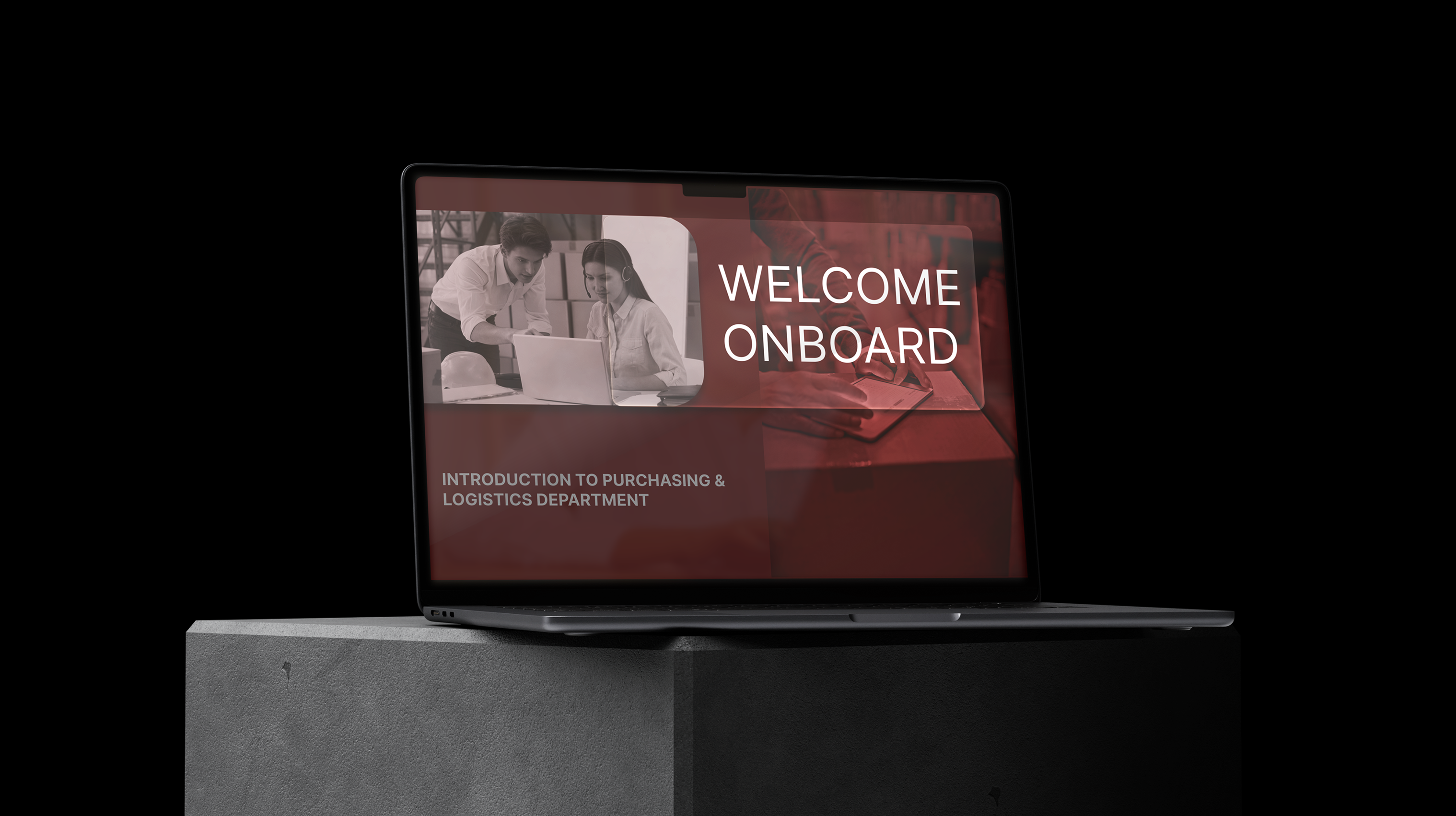
Making Remote Onboarding Work
The Purchasing department historically ran a two-day in-person orientation for rotating trainees, designed to thoroughly introduce them to their upcoming roles and responsibilities within the department.
The orientation was crucial for maintaining essential knowledge transfer. However, COVID-19 social distancing measures made continuing in the traditional format impossible.
Articulate 360 ● Final Cut Pro X ● H5P ● Adobe Photoshop
Summary
The Gap
COVID restrictions ruled out the in-person orientation, but trainees still had to be job-ready and confident from day one.
The Work
Virtual kickoffs via Teams, paired with a self-paced learning path: interactive videos, a 360° facility tour with embedded scenarios, microlearning modules, and system simulations.
The Shift
Over 75% of trainees completed the full learning path. Competency levels matched or exceeded traditional onboarding, and the department kept the program running after COVID.
Where It Started
The audience for this work was Purchasing trainees in the Real-World Learning program, a hospitality program providing hands-on professional experience in active business environments. My role covered instructional design, video production, and e-learning development.
The solution combined live virtual sessions via Teams with self-paced learning: interactive videos, a 360° virtual tour with embedded scenario prompts, microlearning modules, and system simulations for hands-on practice with inventory management workflows, such as reviewing requisitions, placing orders, and conducting stock counts.
This approach replicated the essential knowledge transfer and skill-building of in-person orientation while accommodating the constraints of remote delivery.
This work sample represents my individual design approach and methodology. It does not reflect the procedures, processes, or team practices of my current or former employers.
Project Goal
Keep onboarding effective while adhering to health guidelines and COVID restrictions. This alternative approach had to:
- Explain where Purchasing fits within the organization and why it matters
- Build core competence so trainees can perform their tasks and responsibilities
- Provide channels for questions and clarification, not just one-way content delivery
- Maintain performance metrics, with the same confidence and motivation levels as before COVID
Analysis and Scoping
I started by analyzing feedback from past onboarding sessions, which confirmed that onboarding still had to take place to maintain trainee readiness, confidence, and engagement. Then I mapped the must-keep activities tied to core responsibilities, like managing inventory, tracking supplier delivery schedules, overseeing goods receipt and quality checks, and timely distribution to all departments.
The department head assigned two subject matter experts to the project: the facilitators who worked directly with trainees on the floor day to day. Through them, I gathered frequently asked questions from both orientation and daily work. They also emphasized the variance in trainee background knowledge. Some had purchasing experience while others were completely new, and stressed the need for content that worked for mixed experience levels.
Solution
The solution blended virtual introductions via Teams with a self-paced learning path that consisted of an interactive video, a 360° virtual tour, microlearning modules, and system simulations.
The interactive video gave trainees a general impression of the department and their roles and responsibilities. The 360° virtual tour enabled trainees to navigate the space freely and gain a realistic understanding of their working environment. System simulations provided hands-on practice with the end-to-end inventory management system workflows, from reviewing internal requisitions and placing external orders to conducting stock counts. Most content is under NDA; examples below show the 360° tour with embedded challenges and the microlearning recap structure.
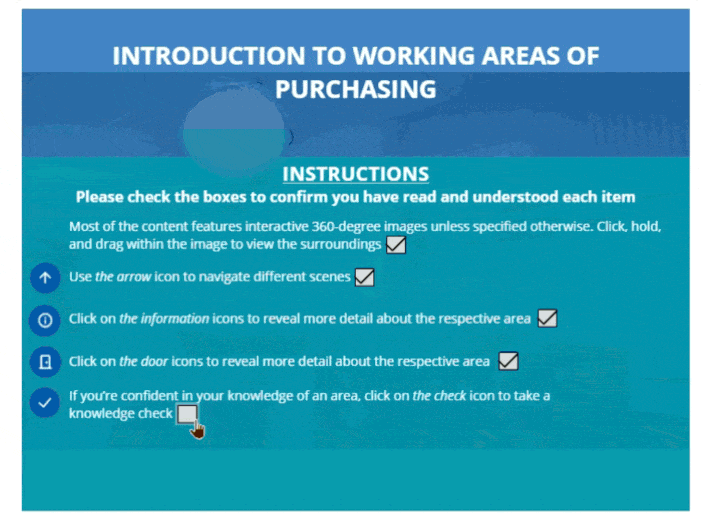
Compressed for faster loading
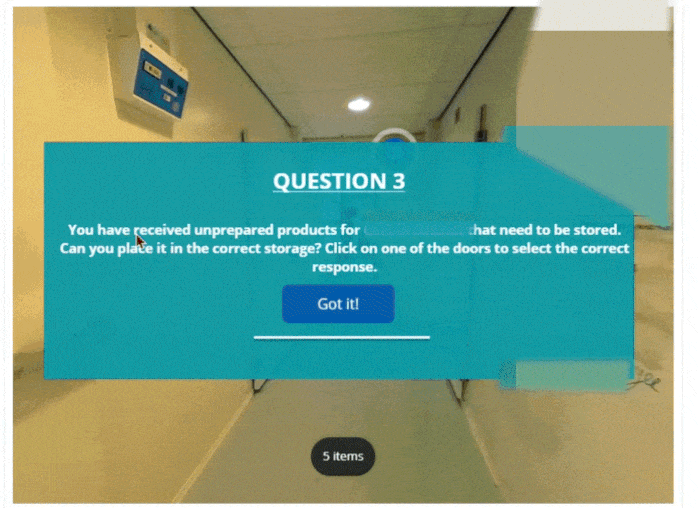
The 360° virtual tour included embedded scenario prompts to test trainees' knowledge. Trainees already familiar with the facility could skip directly to the prompts.
Compressed for faster loading
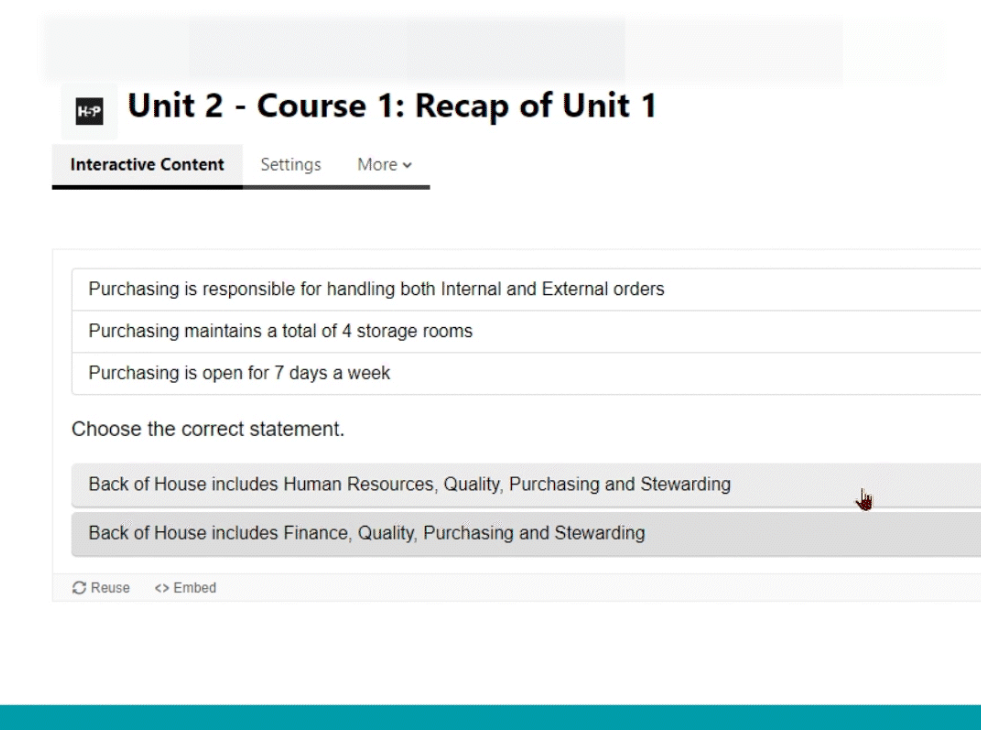
Short recaps between units reinforce prior learning and preview what's next. For trainees with background knowledge, it's a way to get up to speed without sitting through everything.
Compressed for faster loading
Outcomes
On my walkarounds, I saw confident, engaged trainees at work. Performance held up too. Reports came back that trainees were handling responsibilities at a level that matched, if not exceeded, what supervisors saw with traditional in-person onboarding. Engagement with the resources was strong as well. Time-on-course data showed genuine investment, not just box-ticking. With a cohort of roughly eight trainees every five weeks, over 75% completed the full learning path, representing around 30 completions over a six-month period.
While COVID restrictions were the trigger, the solution outlived the problem. The department kept it running because trainees could revisit what they needed, every cohort got the same experience, and performance outcomes stayed on par with traditional onboarding.