
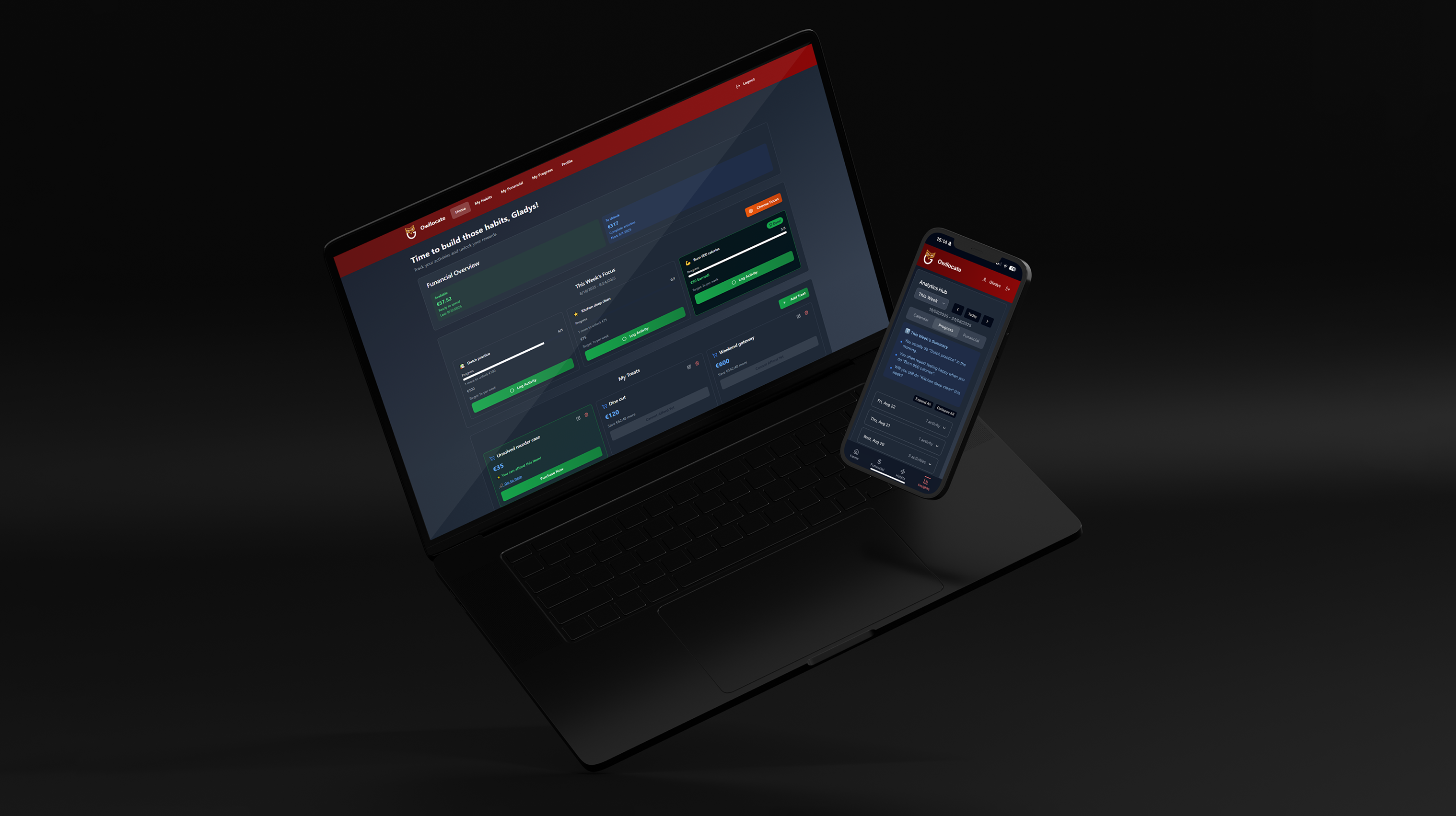
Getting Started with Owllocate
Think about the last time you wanted to pick up a new skill or tool but did not know where to start. You knew having it under your belt would make you better at your work, maybe even more marketable. The value was obvious, but the path was not.
Now imagine two versions of that tool. One gives you the usual kit: academy content, documentation, and a community platform. The other gives you the same kit, plus a practice lab where you can build confidence from first attempt to advanced workflows.
Which tool would you invest your time in?
Try Me
Articulate Storyline ● Parta ● Adobe Illustrator
JavaScript ● Google Apps Script
Summary
The Gap
At work, I'm responsible for a topic where a small knowledge gap could turn into a lengthy support investigation.
The workflow is complex, and when something went wrong, the Support team frequently had to trace what the user had tried, where the issue started, and what needed to be corrected. So the problem was not only ticket volume but also the time and cost each ticket could consume once it landed.
Something was needed to prevent avoidable tickets before they existed.
The Work
A hands-on simulation series that lets users practice the workflow before doing it in the real system.
The experience used character-led scenarios to give each task a reason rather than a sequence of clicks. Users could choose the level of guidance at the start or switch throughout the simulations: guided practice if the workflow was unfamiliar, or independent practice if they already had enough context. I also added targeted tracking inside the experience so I could see where users got stuck most often.
The Shift
Trained users submitted 77% fewer support tickets on the topics they practiced. Continuous refinements contributed to an average of 14% quarter-over-quarter reduction in support tickets among trained users.
I templatized the simulation structure for future projects with similar challenges, which cut development time by half in later builds.
Where It Started
"Would you keep learning if the safest option was to stop?"
That question is the starting point for this case study. Complex product workflows tend to fail because the user reaches a step where the next move feels risky and Customer Support is a few clicks away. It's the rational move to stop, open a ticket, and let someone who knows the system untangle it. It solves the immediate problem, but doesn't scale or build capability. The good thing is, stopping didn't have to be the safest option.
My working hypothesis: if users could practice the workflow as if they were in the real system, through goal-focused tasks that gradually increase in complexity, with guidance available at any point, and feedback tied to the consequences of their choices, they would become more capable, more confident, and less dependent on Support teams.
Below, I elaborate on my design choices. The data work deserves its own deep dive and you can explore it in its dedicated case study linked at the end of this page.
Owllocate runs at a much smaller scale than the enterprise software I work with day to day, but the 77% result and 14% QoQ average improvement came from the original work.
⚙️ Learning Design & Technical Implementation
Immersive Simulation
The moment stakes are high and the interface is unfamiliar is exactly when people fall apart. That's why one of my go-to approaches for complex system training is immersive simulation that mirrors the system's actual interface. And what makes such simulations effective isn't the perfect interface replication but the problem being solved.
To keep the experience grounded in real work, I design simulations around a character navigating the same challenges and tasks users (will) have in their day-to-day.
Users stay in control the entire time. They can choose step-by-step guidance or work independently, and switch modes at any point throughout the simulation. In independent practice mode, hints provide optional, high-level direction that gives just enough support to keep moving forward without taking away agency.
The result of this approach is tangible. On average, users who complete such simulations submit ~77% fewer support tickets for the topics they've practiced. That's my principle behind immersive simulation: the shift from knowing where to click to shaping understanding that maximizes product readiness.
Making Training Count
Measuring how training influences business outcomes is genuinely complex, but it's also one of the most rewarding pieces of work I've done in my eight years as a learning professional. If you're interested in the data side of Customer Education, Learning & Development, or Go-To-Market Enablement, you can check out my other piece where I walk through how I built a trained-user framework and a Power BI report that surfaces what's actually happening inside a training program and how it translates to business results.
Measuring Training Effectiveness